Advertisement · Sponsored content by JBV Consultancy OÜ
How to get your home ready for the cold months
Late autumn is a good time for a few small jobs around the house. Finding and sealing drafts, looking after the furnace, setting the thermostat sensibly and checking the carbon monoxide alarm can all be done in a weekend, and most need only basic tools.
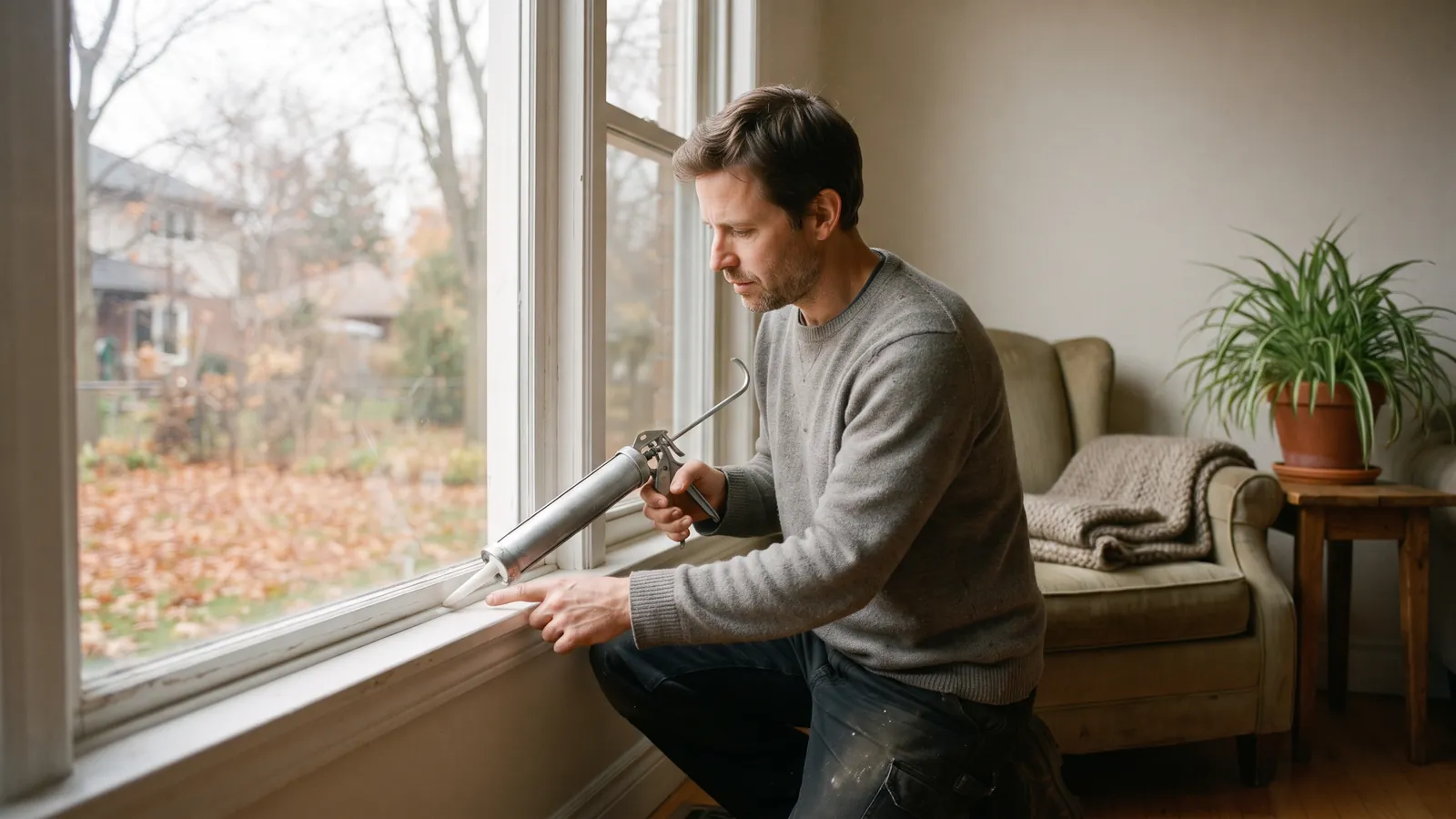
The steps below draw on Natural Resources Canada’s (NRCan) homeowner guide Keeping the Heat In and on Health Canada’s carbon monoxide guidance. Read your appliance manuals too, and call a qualified contractor for anything you are not comfortable doing yourself.
How a house loses heat
It is easy to assume that most heat escapes through the roof because warm air rises. NRCan explains that this is not necessarily so: heat moves out of a house in all directions. It also notes that uncontrolled air leakage through the walls, ceiling and floors can be the major source of heat loss.
In winter a house behaves a little like a chimney. Warm air rises and escapes through gaps near the top of the house and into the attic, while cold air is drawn in lower down, for example around basement windows and the rim joist. NRCan calls this the stack effect, and it is why gaps at both the top and the bottom of the house matter.
In winter a house behaves a little like a chimney.
Windows and doors are another common source. NRCan notes that they can account for up to a quarter of a home’s total heat loss.
Finding drafts yourself
NRCan suggests a simple do-it-yourself leak detector: a couple of lit incense sticks held together. Move them slowly around a suspected gap. A strong leak scatters the smoke, while a slower one makes it trail toward the gap or away from it. Leaks are easier to find on a cold, windy day.
NRCan’s guide lists the places most worth checking:
- around window sashes and frames, and around doors, including the threshold
- electrical outlets and switches, including those on interior walls
- exhaust fans and vents, which should close properly when not in use
- the mail slot, ceiling light fixtures, baseboards and trim
- the attic hatch and any pipes or wires passing into the attic
- in the basement, where the wood framing meets the foundation, and where pipes and wires pass through walls
One caution from the guide: if you test for leaks by turning on all the exhaust fans to pull air through the house, first turn off any fuel-fired space heaters and water heaters, to prevent fumes being drawn back into the house.
Sealing gaps around windows, doors and outlets
For most homes, the basic materials are caulking and weatherstripping. NRCan suggests running a bead of caulk around window trim where it meets the wall, and using weatherstripping on the joints of doors and opening windows. It recommends sealing on the inside first, then the outside, and choosing a product suited to each location. Foam gaskets installed behind switch and outlet covers on exterior walls are an inexpensive way to reduce drafts there.
NRCan also notes that a tighter house can become more humid, and that fuel-burning appliances such as furnaces, water heaters and fireplaces need enough air to burn and vent safely. If you are unsure about ventilation, ask a professional.
The attic and basement
In the attic, NRCan stresses sealing air leaks before adding insulation, since insulation on its own does not stop air movement. Common leak points include plumbing stacks, wiring holes, ceiling light fixtures, ducts and the attic hatch itself. Work around chimneys and recessed lights needs particular care: NRCan’s guide calls for non-combustible materials and clearances around chimneys, and warns that ordinary recessed light fixtures can become a fire hazard if covered with insulation. This is a reasonable place to call a contractor.
Furnace filter and servicing
For forced-air systems, NRCan recommends cleaning or changing the furnace filter every three months, or sooner if it looks dirty, because a clogged filter makes the furnace work harder. It also suggests keeping furniture and other items away from warm-air vents and return-air grilles.
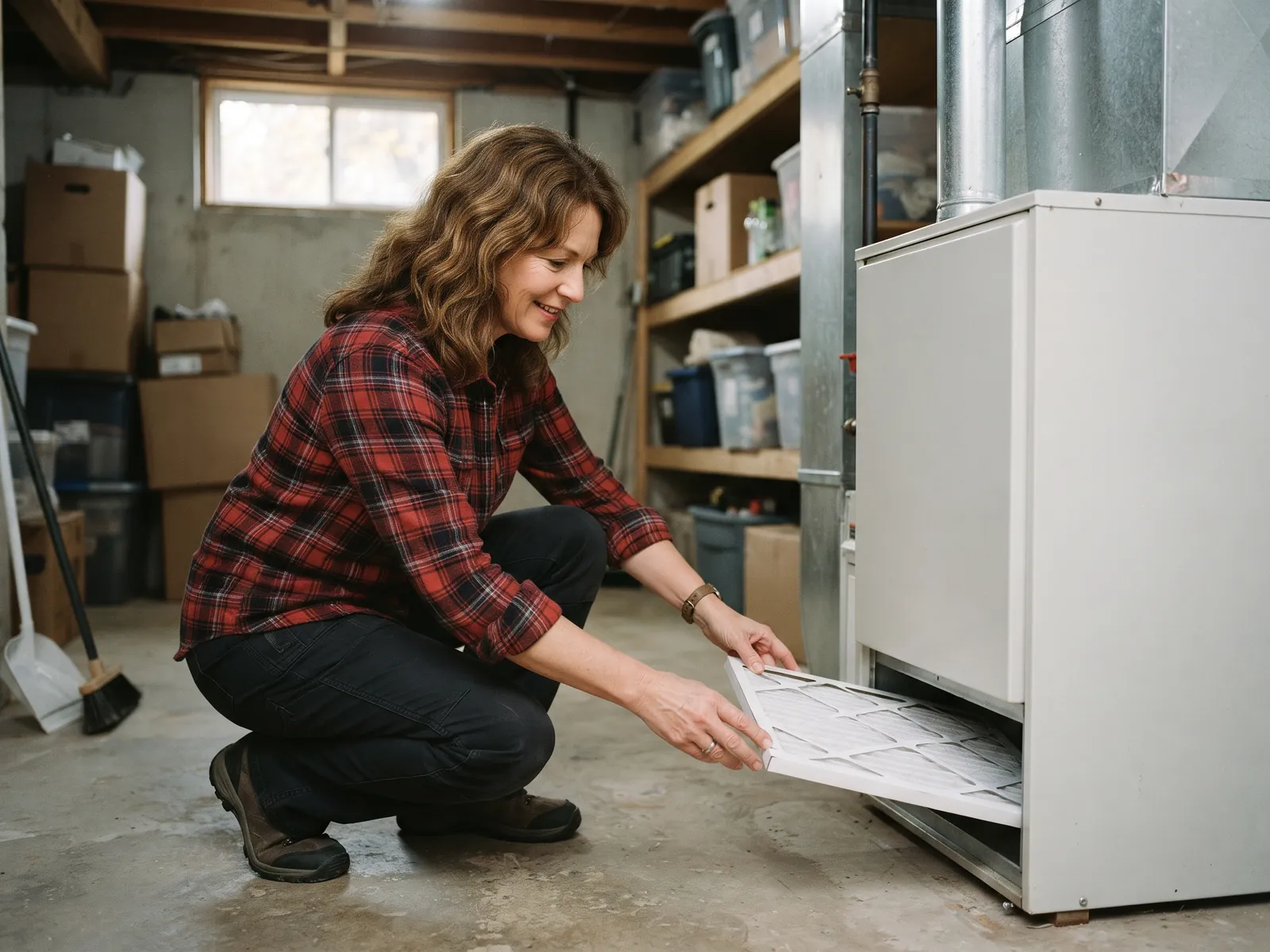
Health Canada recommends having fuel-burning appliances inspected by a professional at least once a year, or as the manufacturer recommends, and having a wood-burning fireplace chimney cleaned every year. If your home is heated by a boiler with radiators, NRCan suggests bleeding air from the radiators once or twice a year.
Thermostat settings
NRCan recommends a programmable thermostat that lowers the temperature while you are asleep or away. A basic model allows at least two setback periods a day, for example overnight and during the workday. NRCan suggests about 17°C while sleeping or away and about 20°C while awake and at home, and advises against going below 17°C because of the risk of moisture building up in exterior walls.
Some heat pumps and hot-water heating systems respond slowly, and NRCan notes they are an exception to simple setback advice. If you have one of these systems, ask your installer what setback suits it.
Checking the carbon monoxide alarm
Carbon monoxide has no colour or smell, so an alarm is the only practical way to detect it at home. Health Canada’s guidance is straightforward:
- The most important place for a carbon monoxide alarm is in the hallway outside sleeping areas.
- Test alarms regularly, and replace batteries and the alarm itself as the manufacturer recommends. Check the expiry date on the unit.
- Buy alarms certified to Canadian safety standards; the certification mark should be on the alarm and its packaging.
- After a snowstorm, check that exhaust vents for the furnace, dryer, fireplace and other appliances are not blocked by snow or ice.
- Do not idle a vehicle in an attached garage, even with the garage door open.
If the alarm sounds, Health Canada advises leaving the home right away, not trying to find the source, and calling 9-1-1 or the local fire department from outside.
 Illustrative checklist: an autumn weekend at home
| Task | Done |
|---|---|
| Walk around windows, doors and outlets with an incense stick on a windy day | ☐ |
| Re-caulk window trim and replace worn weatherstripping | ☐ |
| Check that the attic hatch closes snugly | ☐ |
| Clean or change the furnace filter; note the date | ☐ |
| Book the yearly inspection of fuel-burning appliances | ☐ |
| Set the thermostat schedule for sleeping and away hours | ☐ |
| Test the carbon monoxide alarm and check its expiry date | ☐ |
| Clear furniture away from vents and return-air grilles | ☐ |
Common questions
Do I need a professional to find air leaks?
Not necessarily. NRCan describes a simple do-it-yourself method, though it notes that professional air-sealing contractors can usually find and seal leaks more thoroughly, often using a blower door test.
How often should the furnace filter be changed?
NRCan suggests every three months, or sooner if it is dirty. Your furnace manual may give more specific guidance.
Where should the carbon monoxide alarm go?
Health Canada says the most important location is the hallway outside sleeping areas. Follow the manufacturer’s instructions for mounting and testing.
This article is sponsored general information and is not professional, safety or engineering advice. JBV Consultancy OÜ is not affiliated with, endorsed by or acting for Natural Resources Canada, Health Canada or any other government agency, utility, manufacturer or contractor. Always follow the manufacturer’s instructions for your appliances and alarms, and consult a qualified professional for work involving fuel-burning equipment, chimneys, electrical fixtures or ventilation.
Official sources
- Natural Resources Canada — Keeping the Heat In, Section 2: How your house works — where heat is lost, the stack effect.
- Natural Resources Canada — Keeping the Heat In, Chapter 4: Comprehensive air leakage control (PDF) — finding leaks, checklist of leak locations, ventilation cautions.
- Natural Resources Canada — Keeping the Heat In, Section 5: Roofs and attics — air sealing before insulating, chimneys and recessed lights.
- Natural Resources Canada — Keeping the Heat In, Section 9: Operating your house — programmable thermostats, furnace filters.
- Natural Resources Canada — 5 ways to stay cozy this winter without turning up the heat — thermostat settings, sealing windows and doors, outlet gaskets, maintenance.
- Health Canada — Carbon monoxide: Preventing exposure — alarm placement, testing, certification, appliance inspection, what to do if an alarm sounds.
Fette Fische Bazar is a private, sponsored information website published by JBV Consultancy OÜ. It is not affiliated with the Government of Canada, Service Canada, the Canada Revenue Agency or any provincial government. This article is general information, not financial, tax or legal advice. Every amount in it is either a published government figure, quoted with its period, or an illustrative example; none is a promise or an estimate of what any reader will receive. Figures were checked against the sources above on and change over time. This website processes no applications and takes no fees. Never give your Social Insurance Number, banking details or a government account password to a website in response to an article; for your own file, use My Service Canada Account, CRA My Account or the official telephone lines.
Every Saturday in The Saturday Post: one benefit rule explained, one date to note, one thing worth checking. Free.