How OAS works for people who came to Canada as adults
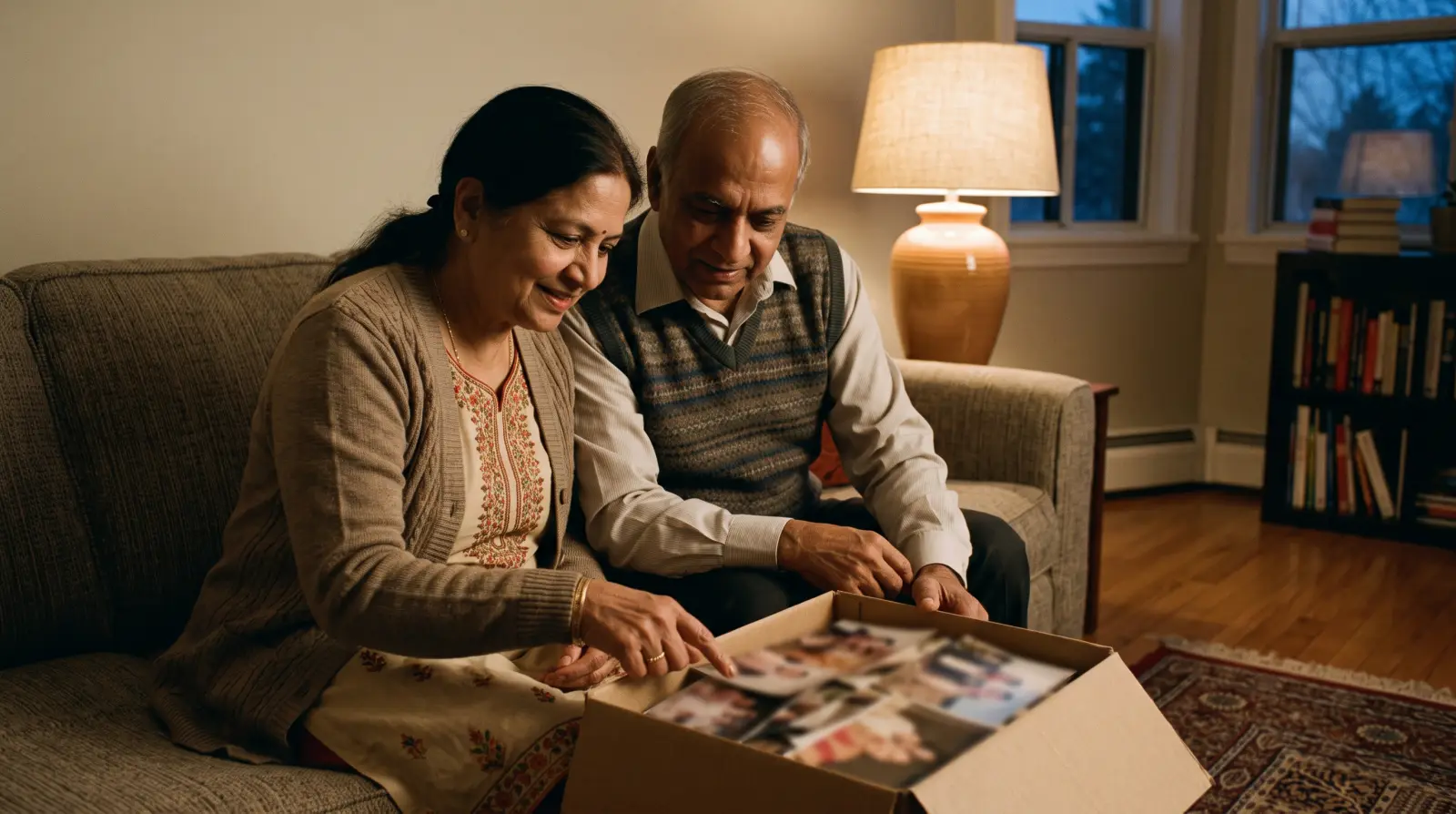
A woman who arrived in Canada at 41, worked here for twenty-five years and raised her family here may be surprised to find that her Old Age Security pension is about 60% of what her Canadian-born neighbour receives. Nothing has gone wrong. OAS is built on a different principle from a workplace pension, and for anyone who came to Canada as an adult, that principle decides the amount.
Paid for living here, not for working here
The Canada Pension Plan is earned through contributions from work. Old Age Security is not. It is funded from general tax revenue and paid on the basis of how long a person has lived in Canada after the age of 18. Earnings, job history and contributions play no part in the OAS amount.
That makes OAS generous to people with patchy work histories, such as those who spent years caring for children, and comparatively less generous to people who arrived later in life, whatever they earned once here. The two programs are separate, which is also why the January CPP adjustment discussed in our lead article, why your CPP payment may look different this year, should never be applied to an OAS amount.
The ten-year door
To receive OAS while living in Canada, a person must have lived in Canada for at least 10 years since the age of 18. To receive it while living abroad, the minimum is 20 years. These are thresholds: below them, no OAS pension is payable from Canadian residence alone.
Legal status matters too: at the time of approval a person must be a Canadian citizen or legal resident if living in Canada. The details are set out in the eligibility pages on canada.ca.
The arithmetic of fortieths
A full OAS pension corresponds to 40 years of residence in Canada after 18. Someone with fewer years may receive a partial pension, which the Government of Canada describes simply as “years lived in Canada ÷ 40”. Each full year of residence after 18 is worth one fortieth of a full pension.
For the woman in our opening, who arrived at 41 and applies at 65, that is 24 full years: 24/40, or 60% of the full amount.
What a partial pension looks like in 2026
| Years in Canada after 18 | Fraction | Illustrative monthly amount |
|---|---|---|
| Fewer than 10 | – | Not eligible on residence alone |
| 10 | 10/40 | $190.63 |
| 20 | 20/40 | $381.25 |
| 24 | 24/40 | $457.50 |
| 30 | 30/40 | $571.88 |
| 40 or more | 40/40 | $762.50 |
For people aged 75 and over the maximum is higher, $838.75 a month in the same quarter, because OAS rises automatically by 10% in the month after a person’s 75th birthday. The same fraction applies to that higher figure.
A low-income senior with a partial OAS pension may also qualify for the Guaranteed Income Supplement, which is income-tested and can make up some of the difference. Provincial supplements may follow; see the provincial top-ups that sit on top of OAS and GIS.
Once it starts, the fraction is fixed
This is the rule that most affects decisions. Service Canada states that once payments begin, “any additional time you live in Canada will not increase your payment amount.” A person who starts OAS at 65 with 24 years keeps 24/40 for life, even if they live in Canada for another twenty years.
Separately, anyone may defer OAS beyond 65. The government says payments increase by 0.6% for each month of delay, up to 36% at age 70. For someone whose residence count is still rising, it is worth asking Service Canada how a later start date would be calculated in their case before applying, because the decision cannot be reopened later to add years.
When years abroad can help
Canada has social security agreements with more than 50 countries. Under these agreements, periods of residence or contributions in the other country can be used to help meet the minimum requirements for OAS. They do not, however, increase the amount. Canada’s own guidance puts it plainly: “An agreement does not increase your payment amount – it only helps determine eligibility.”
 Example from the federal OAS toolkit, simplified
The sponsorship rule that changed in 2025
For parents and grandparents who came to Canada under a family sponsorship, a change took effect on October 1, 2025. Canada.ca now states that a person under a sponsorship agreement cannot receive the Guaranteed Income Supplement, the Allowance or the Allowance for the Survivor for the entire length of the sponsorship agreement. It also notes that parent and grandparent sponsorship agreements have been extended from 10 to 20 years in all provinces except Quebec.
There are exceptions, listed by the government, for cases in which the sponsor has died, has been imprisoned for more than six months, has been convicted of an offence against the sponsored person, or has declared personal bankruptcy. These rules affect GIS and the Allowance; the OAS pension itself still depends on residence. Our article on what the Allowance pays to spouses between 60 and 64 covers that benefit in more detail.
Who this matters for, and what to check
- Anyone who came to Canada after 18, particularly after their mid-thirties.
- People who lived or worked in a country with which Canada has a social security agreement.
- Sponsored parents and grandparents, and their sponsors.
- Anyone weighing when to start OAS while their years in Canada are still increasing.
Useful documents include passports with entry stamps, landing or permanent residence papers, and records of addresses over the years. Service Canada may ask for proof of residence periods when assessing an application.
What to take away
OAS rewards years of residence, counted after 18 and divided by 40. For people who arrived as adults, the count matters more than earnings, agreements can open the door without raising the amount, and the fraction is fixed once payments begin. Knowing the arithmetic before applying is the one advantage nobody can take away.
Official sources
- Government of Canada — OAS eligibility — the 10-year and 20-year residence minimums.
- Government of Canada — When to start your OAS pension — partial pensions, deferral and fixed amounts.
- Government of Canada — International social security agreements — eligibility, not amount.
- Government of Canada — GIS eligibility — sponsorship rules effective October 1, 2025.
Fette Fische Bazar is a private, sponsored information website published by JBV Consultancy OÜ. It is not affiliated with the Government of Canada, Service Canada, the Canada Revenue Agency or any provincial government. This article is general information, not financial, tax or legal advice. Every amount in it is either a published government figure, quoted with its period, or an illustrative example; none is a promise or an estimate of what any reader will receive. Figures were checked against the sources above on and change over time. This website processes no applications and takes no fees. Never give your Social Insurance Number, banking details or a government account password to a website in response to an article; for your own file, use My Service Canada Account, CRA My Account or the official telephone lines.
Every Saturday in The Saturday Post: one benefit rule explained, one date to note, one thing worth checking. Free.